



California Veteran Population & Service Statistics
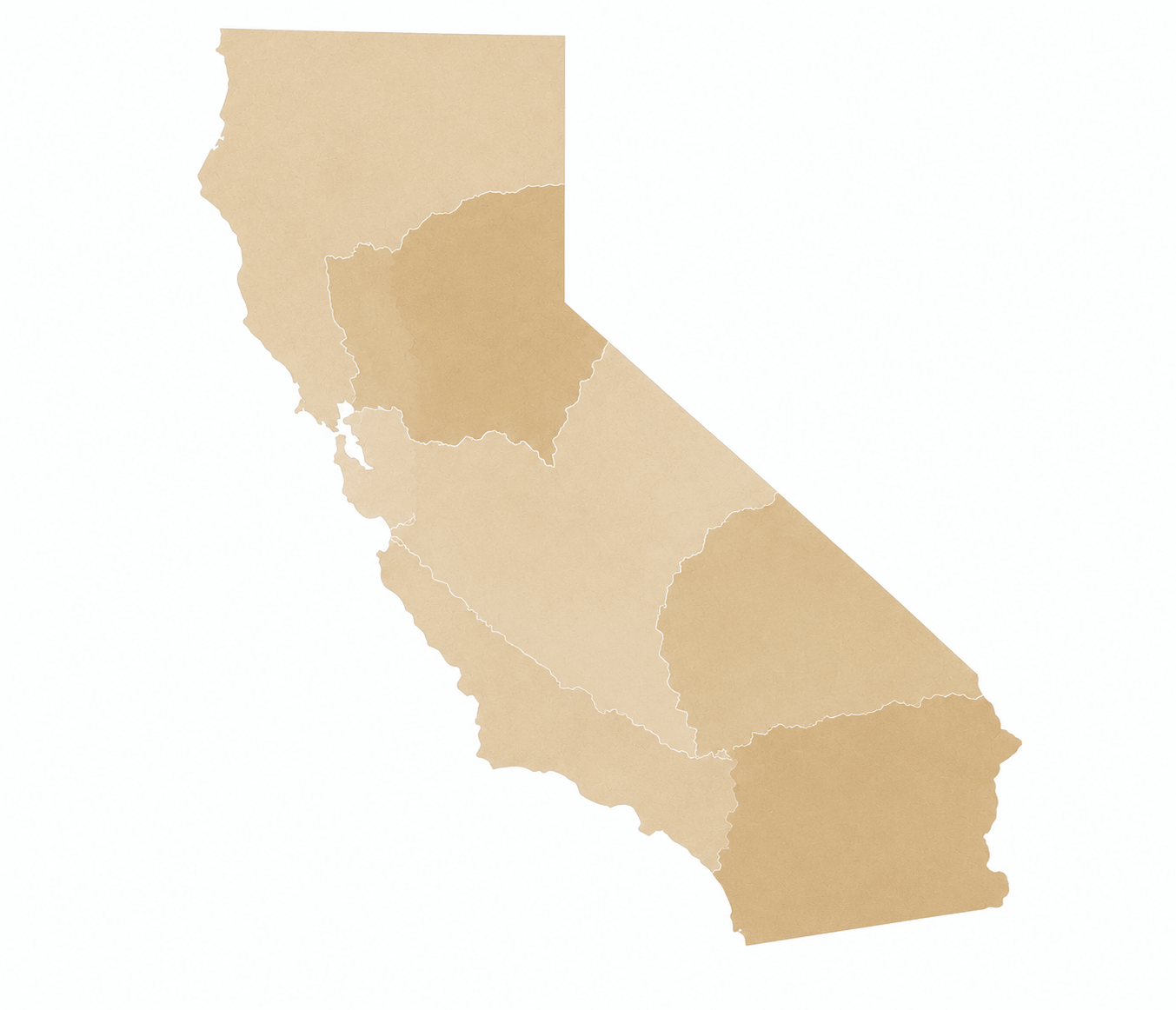
California has the second-largest veteran population in the country and more veterans living with service-connected disabilities than almost any other state. Understanding the scale — and where California veterans live — helps explain why claim backlogs and underrated decisions are so common here.
| California Veteran Demographics | Figure |
|---|---|
| Total veteran population | Approx. 1.35 million |
| Gulf War & Post-9/11 era veterans | ~630,000 |
| Vietnam-era veterans | ~320,000 |
| Veterans living in owner-occupied homes | ~823,000 |
| Counties with VA Regional Offices | 3 (Los Angeles, Alameda, San Diego) |
Sources: California Department of Veterans Affairs (CalVet) Veteran Population Estimates; U.S. Census Bureau American Community Survey 2019-2023; Housing Assistance Council state tabulations.
California’s top veteran-population counties include Los Angeles, San Diego, Riverside, Orange, San Bernardino, and Sacramento. Combined, these six counties are home to more than half of all California veterans — and they generate the bulk of denied claims that come through Oakland, Los Angeles, and San Diego Regional Offices.
California Veteran Case Study — PTSD Rating Increase & TDIU
Representative case — identifying details have been changed to protect client confidentiality. Results vary case by case.
Background
A Marine Corps veteran living in San Diego County was originally rated 30% for PTSD following two combat deployments. After being forced out of his trade work due to severe anxiety, sleep disturbance, and concentration problems, he applied for an increased rating and TDIU. The VA denied the rating increase and denied TDIU, citing a recent C&P exam that described his symptoms as “mild to moderate.”
What Went Wrong with the VA’s Decision
- The C&P examiner spent under 30 minutes with the veteran and did not review his treating-provider records.
- The VA rated PTSD in isolation — ignoring secondary sleep apnea and migraine claims that had been pending.
- Vocational evidence from the veteran’s former employer was never requested.
- The Regional Office did not address the veteran’s lay statements about workplace incidents that led to his termination.
How We Built the Appeal
- Filed a Higher-Level Review challenging the C&P exam adequacy under 38 C.F.R. § 4.2.
- Obtained an independent medical opinion from a psychiatrist establishing severity consistent with a 70% rating.
- Secured a vocational expert report tying PTSD symptoms to the veteran’s inability to maintain substantially gainful employment.
- Documented the secondary service connection between PTSD and the veteran’s sleep apnea.
Outcome
PTSD increased to 70%, secondary sleep apnea granted at 50%, and TDIU awarded — resulting in a 100% payment rate plus retroactive back pay to the original effective date. This is the kind of outcome we work toward for every California veteran whose claim was underrated or denied. Contact us about your case.
Have a denial letter or low rating? We can review the decision, identify missed evidence, and explain which appeal lane may fit your case.
California Veterans Benefits & State Laws
Beyond federal VA disability benefits, California offers some of the most substantial state-level veteran programs in the country. If you have a service-connected disability rating — or you’re fighting to get one — these are the California-specific benefits you should know about.
Disabled Veterans’ Property Tax Exemption
California veterans rated 100% service-connected disabled (or compensated at the 100% rate due to TDIU) qualify for a property tax exemption on their principal residence. There are two tiers, both indexed annually for inflation:
| Exemption Tier | 2026 Exemption Amount | Filing Requirement |
|---|---|---|
| Basic Exemption | $180,671 off assessed value | One-time filing (no income limit) |
| Low-Income Exemption | $271,009 off assessed value | Annual filing by Feb. 15 (household income limit applies) |
Amounts shown are for lien date 2026 per the California State Board of Equalization disabled veterans’ exemption schedule. The 2026 low-income household limit is $81,131. Amounts adjust annually for inflation under Revenue & Taxation Code § 205.5. File Form BOE-261-G with your county assessor.
For a veteran whose 100% rating is established through a successful appeal, this exemption can save roughly $2,000 to $3,000 per year at typical California property tax rates — on top of the increased monthly compensation.
Free Disabled Veteran License Plates
Under California Vehicle Code § 5101, a disabled veteran is entitled to one set of Disabled Veteran license plates at no cost. Qualifying disabilities include:
- Loss or loss of use of one or more limbs
- Permanent blindness (visual acuity 5/200 or less, or visual field of 5° or less)
- Permanent disability rating of 100% service-connected
Disabled Veteran plates also serve as a disabled parking placard — allowing parking in disabled spaces statewide. Apply through the California DMV using Form REG 256A and supporting VA documentation.
CalVet College Tuition Fee Waiver for Veteran Dependents
The CalVet College Fee Waiver pays system-wide tuition and mandatory fees at any California Community College, California State University (CSU), or University of California (UC) campus — for qualifying dependents of disabled or deceased veterans.
Who Qualifies (Plan A & Plan B — Most Common):
- Plan A: Unmarried children (age 14–27, or up to 30 if the child is also a veteran) and spouses/surviving spouses of veterans with a service-connected total disability or service-connected death. Wartime service required. No income limit.
- Plan B: Children of veterans with any service-connected disability rating. Subject to an annual income limit ($22,941 for the 2026–2027 academic year).
The waiver covers tuition and the mandatory student services fee — not books, housing, or parking. Apply through your County Veterans Service Office. Approval is required for each academic year.
Direct connection to VA appeals: Plan A eligibility depends on having a total service-connected rating. A successful TDIU or 100% schedular appeal opens the door to this waiver — potentially saving a child or spouse tens of thousands of dollars in tuition. (See also our Survivors and Dependents resources.)
Veteran Designation on California Driver License
California veterans can add a “VETERAN” designation to their driver license or state ID free of charge. The mark identifies the holder as an honorably discharged veteran and is accepted as proof of veteran status for many businesses, public agencies, and discount programs. Eligibility requires a Veteran Status Verification Form (VSD-001) signed by your County Veterans Service Office and presented to the DMV.
CalVet Benefits Overview
The California Department of Veterans Affairs (CalVet) administers a portfolio of state-level benefits separate from federal VA programs:
- CalVet Home Loans — State home loan program for California veterans (separate from VA-guaranteed loans).
- California Veterans Homes — Eight long-term care facilities statewide for qualifying veterans and eligible spouses.
- Disabled Veteran Business Enterprise (DVBE) Program — State contracting preferences for veteran-owned businesses with a service-connected disability.
- County Veterans Service Offices (CVSOs) — A free claims-filing resource in every California county.
- Property tax, license plate, and tuition benefits — Described above.
For most California veterans, the foundation of every state benefit is the same: your federal VA disability rating. If your rating is wrong — or your claim was denied — we can help you appeal.
Where to Apply for Military and VA ID Cards in California
Three different ID cards are commonly available to California veterans. Each is issued by a different agency.
Department of Defense ID Card (Active, Retiree, Dependent)
Issued through the RAPIDS (Real-Time Automated Personnel Identification System) network at military ID card offices on bases statewide. Common California RAPIDS sites include:
- Marine Corps Base Camp Pendleton — multiple ID card offices
- Naval Base San Diego, Naval Base Coronado — Pass & ID
- MCAS Miramar — ID card center
- Travis AFB (Solano County) — 60th Force Support Squadron
- Edwards AFB — 412th Force Support Squadron
- Vandenberg Space Force Base — ID card section
- Naval Base Ventura County (Port Hueneme/Point Mugu) — ID card office
- Fort Irwin (National Training Center) — ID card office
- Los Alamitos Joint Forces Training Base — ID card section
- USCG Training Center Petaluma — ID card office
Schedule appointments at RAPIDS online.
Veteran Health Identification Card (VHIC)
Issued by the VA to veterans enrolled in VA healthcare. Enroll through any VA medical center in California or online at va.gov/health-care. After enrollment, request a VHIC in person at any VA medical facility’s enrollment office.
California Veteran ID — “VETERAN” Designation on Driver License/ID
Issued by the California DMV as an endorsement on a standard driver license or ID card. Requires:
- A Veteran Status Verification Form (VSD-001) certified by your County Veterans Service Office.
- An application at any California DMV office (existing license/ID re-issued with the “VETERAN” mark at no additional fee).
This is the easiest path to a readily accepted form of veteran ID for use in California — particularly for veterans not enrolled in VA healthcare.
California VA Regional Office Overview
The U.S. Department of Veterans Affairs operates three Regional Offices in California — the offices that issue the rating decisions, denials, and Higher-Level Review responses you may need to appeal.
| Regional Office | Address | Jurisdiction |
|---|---|---|
| Los Angeles RO | 11000 Wilshire Blvd, Los Angeles, CA 90024 | Southern California — LA, Orange, Ventura, Santa Barbara, San Luis Obispo, Kern |
| Oakland RO | 1301 Clay St, Oakland, CA 94612 | Northern & Central California — Bay Area, Sacramento, North Coast, Central Valley |
| San Diego RO | 8810 Rio San Diego Dr, San Diego, CA 92108 | San Diego, Imperial, Riverside, San Bernardino |
Decision letters carry the issuing RO’s address. The RO that issued your denial doesn’t determine where your appeal is heard at the Board level — BVA appeals are reviewed by Veterans Law Judges in Washington, D.C. regardless of which RO issued the original decision. We handle appeals from all three California ROs.
Common Reasons California VA Claims Are Denied
After 35+ years of representing California veterans, we see the same denial patterns repeat — particularly out of the Oakland and Los Angeles ROs, which handle the largest claim volumes in the country.
- Inadequate C&P examinations. Rushed exams that fail to address all claimed conditions, ignore secondary conditions, or describe symptoms as “mild” when the veteran’s treating providers document severe impairment.
- Missing or weak nexus opinions. A nexus letter must say the condition is “at least as likely as not” related to service — not “possibly,” not “may be related.” Vague language gets claims denied.
- Unverified stressors. Common for PTSD claims based on classified missions, lost personnel records, or pre-2010 sexual trauma incidents.
- Conditions evaluated in isolation. The VA rates each condition separately and ignores how they combine to prevent work — the foundation of most TDIU denials.
- Effective date errors. Veterans lose months or years of back pay when the VA assigns the wrong effective date.
- Service connection denied for “presumptive” conditions. Despite the PACT Act and Agent Orange presumptive lists, the VA continues to deny presumptive claims that should be automatically granted.
- Secondary conditions never claimed. Sleep apnea secondary to PTSD, migraines secondary to TBI, hypertension secondary to PTSD — routinely missed.
- Veterans giving up after the first denial. The single biggest reason California veterans don’t receive the benefits they earned.
If any of this sounds like your case — contact us for a free case review. Not sure where to start? Read our overview of the VA appeals process.
The deadline matters. Most appeal lanes require action within one year of the VA decision date. If you are close to that deadline, call now.
Military Sexual Trauma (MST) Claims for California Veterans
California is home to the largest population of women veterans in the country and one of the most diverse veteran populations overall — meaning more veterans here are affected by Military Sexual Trauma than in any other state. MST applies to any veteran of any gender who experienced sexual assault or threatening, repeated sexual harassment during military service.
If you’ve been denied an MST-related claim — or you’ve been afraid to file one — this section is for you. Our MST appeals practice handles these cases with strict confidentiality, attorney-client privilege protection, and trauma-informed representation.
MST Has Different Evidence Rules — And Most California Veterans Don’t Know It
The VA recognizes that MST often occurs without witnesses or official reports. As a result, MST claims have relaxed evidence standards compared to other PTSD claims:
- No police or command report required. The vast majority of MST incidents in the military have never been formally reported — and the VA cannot deny your claim solely because no report exists.
- Behavioral “markers” count as evidence. Sudden requests for transfer, performance drops, disciplinary issues, substance use, unexplained medical visits, or relationship changes during service can support an MST claim even when nothing was reported.
- Buddy statements from fellow service members describing changes they observed in you are valuable evidence.
- Post-service mental health records from California VA medical centers, Vet Centers, or private providers can also support service connection.
For details, see our resources on evidence for MST claims and supporting a PTSD-from-MST claim without in-service records.
Why MST Claims Get Denied — And How We Appeal Them
- C&P examiners who don’t understand MST evidence rules and demand the kind of documentation that simply doesn’t exist for unreported incidents. (See what to know about C&P exams for MST.)
- Personality disorder misdiagnoses from years ago that pushed survivors out of service rather than recognizing the trauma.
- Secondary conditions never claimed — depression, anxiety, sleep disorders, substance use, eating disorders, gastrointestinal problems, chronic pain. See VA benefits for MST-related secondary conditions.
- Effective date errors that cost veterans years of back pay. See establishing the MST effective date.
MST Resources Available to California Veterans
- MST Coordinators at every California VA medical center — West Los Angeles, Long Beach, Loma Linda, San Diego, Palo Alto, San Francisco, Sacramento (Mather), and Fresno all have dedicated MST coordinators who can connect you to care.
- Free MST-related healthcare regardless of service connection. You don’t need a service-connected rating — or even VA enrollment in the traditional sense — to receive MST-related treatment at any California VA facility.
- Vet Centers throughout California — including West LA, San Diego, Oakland, Sacramento, Fresno, and San Jose — offer confidential MST counseling with no claim or rating required.
- Veterans Crisis Line — Dial 988, then press 1 to reach trained responders who handle MST-related crises confidentially, 24/7.
MST claims require sensitivity, expertise, and a thorough understanding of the relaxed evidence framework. We treat every case with the confidentiality and respect it deserves. Learn more about our MST appeals representation or contact us confidentially.
California Military Bases & Toxic Exposure Claims
California has hosted dozens of military installations — many of which carry documented environmental contamination histories. Veterans who served at these bases may have presumptive or direct service-connection claims for exposure-related conditions.
Active California Bases Commonly Tied to VA Claims
- Marine Corps Base Camp Pendleton (San Diego County)
- Naval Base San Diego & Naval Base Coronado / NAS North Island
- MCAS Miramar (San Diego)
- Marine Corps Air Ground Combat Center Twentynine Palms
- NAS Lemoore (Kings County)
- Travis AFB (Solano County)
- Edwards AFB (Kern County)
- Vandenberg Space Force Base (Santa Barbara County)
- Beale AFB (Yuba County)
- Fort Irwin / National Training Center (San Bernardino County)
- Naval Base Ventura County (Port Hueneme & Point Mugu)
- Los Alamitos Joint Forces Training Base
- Defense Language Institute & Presidio of Monterey
- USCG Training Center Petaluma
Closed California Bases with Documented Contamination Histories
Service at the following former installations may give rise to claims for cancers, respiratory conditions, neurological conditions, or other exposure-linked illnesses. Several are on the EPA’s National Priorities List (Superfund):
- McClellan AFB (Sacramento) — groundwater contamination, TCE, solvents (Superfund site)
- Mather AFB (Sacramento) — landfill and fuel contamination
- Castle AFB (Atwater) — fuel and solvent contamination
- George AFB (Victorville) — TCE and groundwater contamination (Superfund)
- Norton AFB (San Bernardino) — jet fuel and solvent plume
- MCAS El Toro (Irvine) — TCE/PCE groundwater contamination (Superfund)
- MCAS Tustin — documented site contamination
- Hunters Point Naval Shipyard (San Francisco) — radiological contamination (Superfund)
- Treasure Island Naval Station (San Francisco) — radiological contamination
- Mare Island Naval Shipyard (Vallejo) — asbestos, lead, fuel contamination
- Naval Air Station Alameda — multiple contamination sites
- Long Beach Naval Shipyard — asbestos and industrial chemical exposure
Exposure-Related Claims Common Among California Veterans
- PACT Act burn pit exposures — California-stationed veterans deployed to Iraq, Afghanistan, and Southwest Asia (now presumptive for 20+ conditions including respiratory cancers, brain cancers, hypertension)
- Agent Orange presumptives — Vietnam-era veterans, plus presumptive locations now including parts of Thailand, Korean DMZ, and certain C-123 aircraft handlers
- Per- and polyfluoroalkyl substances (PFAS) exposures at firefighting training sites on multiple California bases
- Asbestos and industrial solvent exposures at California shipyards and air depots
- Radiation exposures at Hunters Point, Treasure Island, and Nevada/Pacific test site staging from California bases
If you served at any of these locations and have a condition that may be connected to your service — even if you’ve already been denied — contact us about your appeal options.
Find a VA Facility Near You — Directory
VA Medical Centers (Hospitals)
Southern California
- VA Greater Los Angeles HCS — 11301 Wilshire Blvd, Los Angeles
- VA Long Beach HCS — 5901 E 7th St, Long Beach
- VA Loma Linda HCS — 11201 Benton St, Loma Linda
- VA San Diego HCS — 3350 La Jolla Village Dr, San Diego
Northern & Central California
- VA Palo Alto HCS — 3801 Miranda Ave, Palo Alto
- VA San Francisco HCS — 4150 Clement St, San Francisco
- VA Northern California HCS — 10535 Hospital Way, Mather
- VA Central California HCS — 2615 E Clinton Ave, Fresno
California Veterans Homes (CalVet)
Northern California
- Yountville — 260 California Dr, Yountville
- Redding — 1900 Veterans Way, Redding
- Fresno — 2000 S Fairview Dr, Fresno
Southern California
- West Los Angeles — 11500 Nimitz Ave, Los Angeles
- Lancaster — 45221 30th St W, Lancaster
- Ventura — 10900 Telephone Rd, Ventura
- Barstow — 100 E Veterans Pkwy, Barstow
- Chula Vista — 700 E Naples Ct, Chula Vista
VA Regional Offices
Three California ROs
- Los Angeles RO — 11000 Wilshire Blvd
- Oakland RO — 1301 Clay St
- San Diego RO — 8810 Rio San Diego Dr
Vet Centers
There are 25+ Vet Centers across California offering free, confidential readjustment counseling. Major locations include West LA (Culver City), San Diego, Oakland, Sacramento, Fresno, San Jose, Bakersfield, Riverside, Vallejo, Modesto, Santa Cruz, Eureka, and Ventura. Find your nearest Vet Center at va.gov/find-locations.
California VA Appeals — Local Help by City
We represent veterans throughout California — below is a quick overview of the veteran communities we serve most often.
Los Angeles VA Appeals Lawyer
Los Angeles County is home to the largest urban veteran population in the state. Most LA-area claims are processed through the Los Angeles Regional Office on Wilshire Boulevard. Common LA-region issues we appeal include underrated PTSD ratings out of the Greater LA HCS C&P exam clinic, TDIU denials for veterans who can no longer work in high-cost LA labor markets, and Camp Pendleton-era exposure claims. Contact us about your LA-area appeal.
San Diego VA Appeals Lawyer
San Diego County has the highest concentration of Marine Corps and Navy veterans in the country. The San Diego Regional Office and VA San Diego HCS handle most of the local claim volume. We frequently see appeals involving Camp Pendleton, MCAS Miramar, Naval Base San Diego, and Coronado-based veterans — especially TDIU denials and PTSD rating disputes following multiple deployments. Talk to us about a San Diego appeal.
Sacramento VA Appeals Lawyer
Sacramento veterans are served by the Oakland Regional Office and the VA Northern California HCS at Mather. Many Sacramento-area appeals involve veterans formerly stationed at McClellan AFB or Mather AFB — both with documented contamination histories that support exposure-related claims. Get a free Sacramento case review.
Oakland & Bay Area VA Appeals Lawyer
The Oakland Regional Office handles the largest geographic jurisdiction in the state — Bay Area, North Coast, Central Valley, and much of northern California. Bay Area appeals frequently involve Hunters Point Naval Shipyard, Treasure Island, Mare Island, and NAS Alameda veterans, all with significant contamination histories. Contact us about a Bay Area appeal.
Fresno & Central Valley VA Appeals Lawyer
Central Valley veterans are served by the VA Central California HCS in Fresno under the Oakland RO’s jurisdiction. We see appeals from NAS Lemoore Navy veterans and Vietnam-era Central Valley veterans contesting Agent Orange presumptive denials. Contact us about a Fresno-area appeal.
San Jose & South Bay VA Appeals Lawyer
South Bay veterans typically see care through the VA Palo Alto HCS system, with claims processed through Oakland. Common South Bay appeals involve veterans from former Moffett Federal Airfield, Reserve and Guard members, and post-9/11 veterans transitioning into the regional tech economy. Talk to us about a San Jose appeal.
How do I appeal a denied VA claim in California?
You have three options under the AMA appeals framework: a Higher-Level Review (a senior reviewer at the Regional Office takes a fresh look at the existing record), a Supplemental Claim (you submit new and relevant evidence), or a Board Appeal (you appeal directly to the Board of Veterans’ Appeals). Each lane has a one-year filing deadline from the date of the decision letter. The right choice depends on whether you have new evidence, whether you want a hearing, and how strong the existing record already is. We can help you choose the path most likely to win your specific case.
How long does a VA appeal take in California?
It depends on the lane: Higher-Level Reviews average 4 to 6 months; Supplemental Claims average 5 to 8 months; Board Appeals take 12 to 24+ months depending on whether you choose direct review, evidence submission, or a hearing. California veterans appealing out of Oakland and Los Angeles ROs sometimes see longer-than-average timelines due to high case volume. (See also: speeding up the appeals process.)
Where is the nearest VA Regional Office to me?
California has three VA Regional Offices: Los Angeles (serving Southern California coastal counties), Oakland (serving Northern California, the Bay Area, and most of the Central Valley), and San Diego (serving San Diego, Imperial, Riverside, and San Bernardino). Your most recent decision letter will identify which RO is handling your case.
Can dependents receive tuition benefits in California?
Yes. Children, spouses, and surviving spouses of veterans with a total service-connected disability or service-connected death may qualify for the CalVet College Fee Waiver, which covers system-wide tuition and mandatory fees at any California Community College, CSU, or UC campus. Lesser-rated veterans’ children may qualify under Plan B (subject to an income limit). A successful VA appeal raising a veteran’s rating to 100% or TDIU often unlocks Plan A eligibility for dependents. (See our Survivors & Dependents page for related benefits.)
Who qualifies for California disabled veteran property tax exemptions?
California veterans rated 100% service-connected disabled (including TDIU), or who are blind in both eyes or have lost the use of two or more limbs due to military service, qualify for the Disabled Veterans’ Property Tax Exemption on their principal residence. There is a basic tier and a low-income tier — both amounts adjust annually for inflation. Surviving spouses of qualifying veterans may also be eligible.
Can I file an MST claim if I never reported what happened?
Yes — and most successful MST claims involve incidents that were never officially reported. The VA recognizes that reporting Military Sexual Trauma during service is rare due to fear of retaliation, command climate, and other factors. MST claims have relaxed evidence standards: police reports, command reports, and witness statements are not required. Alternative evidence — behavioral changes during service, transfer requests, performance drops, medical visits, substance use, and post-service mental health records — can establish that MST occurred. Read more on our MST appeals page.
Where can California veterans get confidential MST support?
Every California VA medical center has an MST Coordinator, and treatment for MST-related conditions is free regardless of service connection or VA enrollment status. California Vet Centers (West LA, San Diego, Oakland, Sacramento, Fresno, San Jose, and others) provide confidential MST counseling with no claim required. For 24/7 crisis support, the Veterans Crisis Line is reachable by dialing 988 and pressing 1.
What happens if I served at a contaminated California base?
You may have a presumptive or direct service-connection claim depending on the base, the contamination, and your current diagnosis. Veterans who served at McClellan AFB, El Toro MCAS, Hunters Point Naval Shipyard, and other documented contamination sites have successfully won service connection for cancers, respiratory diseases, and neurological conditions. The PACT Act and Agent Orange presumptive lists have also expanded recently. If you’ve been denied an exposure-related claim, contact us — we routinely build appeals around environmental exposure evidence.
California Veterans — Free Appeal Consultation
If the VA denied your California disability claim, underrated your condition, or denied TDIU — we want to hear about your case. Consultations are free. We work on contingency, so you pay nothing unless we win.
Call (877) 629-1712 Request a Case Review
Serving veterans throughout California — Los Angeles, San Diego, Sacramento, the Bay Area, Fresno, and beyond. Se habla español.